Autumn Reading Challenge: 12 Cosy Books for Darker Nights
The reading that belongs to autumn is a particular kind. Not the ambitious stack assembled in January, and not the paperback with sand still in the spine, but something quieter: a book you can sink into at half past eight, curtains drawn, mug going cold beside the lamp.
This challenge is built around that feeling. Twelve books, roughly twelve weeks, and a set of prompts to give the evenings a shape. Start when the nights begin drawing in where you live. Late September is traditional; the middle of October works just as well, and there is no prize for finishing before the clocks change.
How the Challenge Works
Twelve books across three months is one a week if you read quickly, one a fortnight if you read slowly, and somewhere in between for most of us. Adjust the pace rather than the list, and ignore anyone keeping score.
- One book at a time. Half-finished books multiply in autumn, and a pile of them is discouraging. Finish, abandon, or set aside deliberately — but keep one on the go.
- Comfort is the only entry requirement. If a book starts to feel like homework, it is the wrong book for this challenge. There is no exam in December.
- Twenty minutes counts. A chapter before bed, a few pages over lunch, half an hour while the dinner cooks. It adds up faster than you would think.
- Write two lines per book. What you read it for, where you read it, whether you would press it on a friend. By December you have a record of the season.
The Twelve Books
The list mixes old favourites with books that are simply the right shape for a dark evening: short chapters, warm narrators, plots that do not need a spreadsheet to follow. Borrow them, buy them secondhand, or reserve them at the library — the challenge works the same either way.
Gentle Classics and Quiet Fiction
- The Wind in the Willows — Kenneth Grahame. The riverbank, Mole's underground home, carol singers in the snow. The winter chapters land differently in November.
- Persuasion — Jane Austen. Her quietest novel, and the most autumnal: Anne Elliot, a second chance, long walks and careful feeling.
- Anne of Green Gables — L. M. Montgomery. Bright, funny and generous. Good medicine for a grey week, and excellent read aloud.
- A Month in the Country — J. L. Carr. A slim novel about a man restoring a church wall painting in a Yorkshire village. Still, sad and beautifully understated.
Cosy Crime and Comic Comfort
- The Murder at the Vicarage — Agatha Christie. The first full-length Miss Marple mystery: a village, a disapproving narrator and a puzzle you can solve in bed.
- Cold Comfort Farm — Stella Gibbons. Flora Poste tidies up her rural relatives with devastating patience. Very funny, and short enough for one wet weekend.
- The Diary of a Provincial Lady — E. M. Delafield. Domestic life, small disasters, endless cups of tea. Funny in the way that only complete honesty is.
- The Shell Seekers — Rosamunde Pilcher. A long, warm family novel. Save it for the week you want something to live inside.
A Little Magic, and a Nature Diary
- The Dark Is Rising — Susan Cooper. Will Stanton, the days around midwinter and a very English kind of magic. Keep it for December.
- Howl's Moving Castle — Diana Wynne Jones. A walking castle, a curse and a brisk heroine. Witty, kind and almost impossible to read gloomily.
- The Hobbit — J. R. R. Tolkien. Begin with the unexpected party and the biscuits, then let the journey take the rest of the month.
- The Country Diary of an Edwardian Lady — Edith Holden. Watercolours and notes on the changing year. A page or two a night, no plot required.
Five Prompts for Darker Evenings
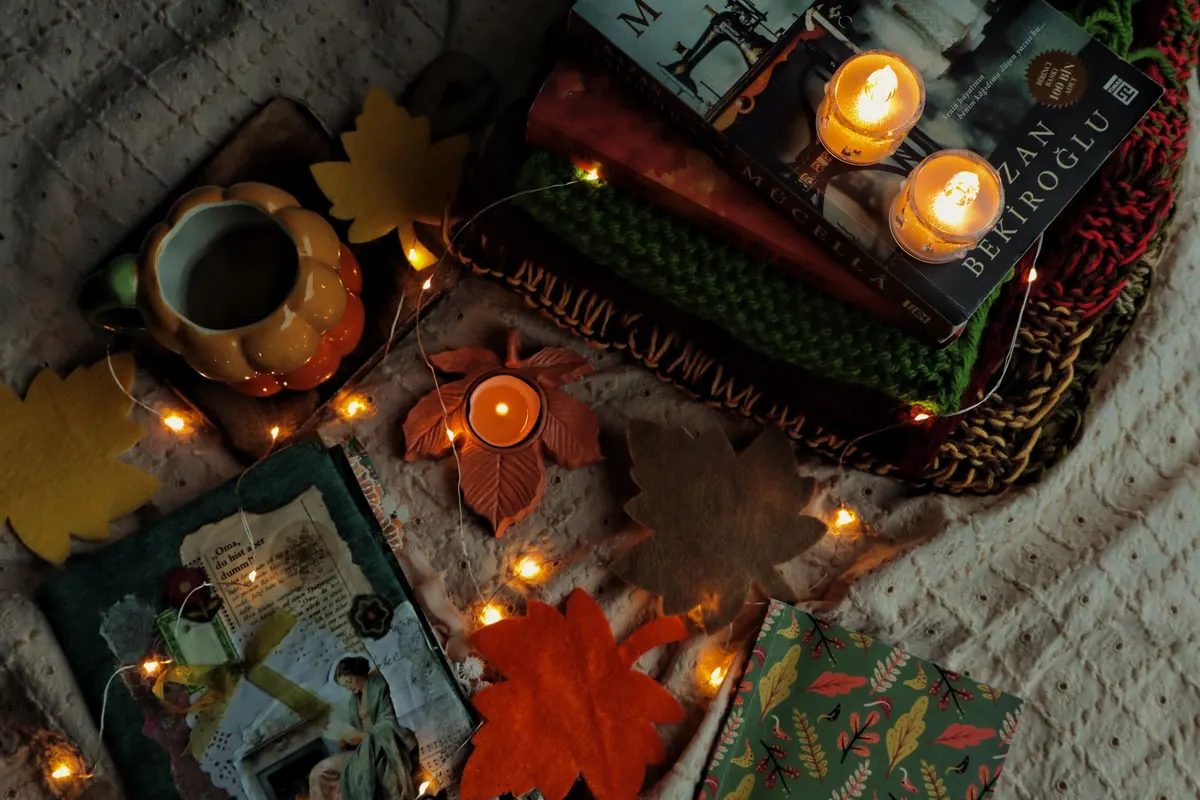
- Lamp light only. Turn off the overhead light, put the phone in another room and read by one warm lamp. It sounds like a small thing; it changes how long you stay.
- Match the drink to the book. Cocoa for Toad, tea and shortbread for St Mary Mead, something spiced for the winter chapters. Small rituals make an evening feel deliberate.
- Read the weather. When the first real fog or frost arrives, find a chapter that matches it. Autumn books are full of them.
- Finish with a poem. One poem before sleep, even on a night when you have read nothing else.
- Read one chapter aloud. To a partner, a child or an empty room. Dialogue written to be spoken — Grahame, Christie, Gibbons — comes alive immediately.
Making It Stick
Attach the reading to something you already do. Kettle on, book open. Train home, book out. Bath running, chapter started. Habits grow around existing routines far more reliably than around good intentions.
Keep the list where you will see it: inside the front cover of your current book, on the fridge, in the back of a notebook. Tick off what you finish and jot the date beside it. If you fall behind, skip a book rather than the whole challenge — twelve is a shape, not a contract. Rereading an old favourite counts. So does giving up on page forty and choosing something warmer. If a book turns out to be heavy going — grief, war, cruelty — that is a perfectly good reason to set it aside until spring.
Where to Start This Week
Pick one book from the list. If you cannot decide, take The Wind in the Willows for warmth or The Murder at the Vicarage for momentum. Choose your reading slot — fifteen minutes is enough to begin with — and write it down somewhere you will see tomorrow. Then find the book: the library, a charity shop, or the shelf you already own.
Set the lamp, make the drink, and start tonight. The point of the challenge is to make the darker evenings feel longer and better, not to add another deadline to the week. Finish four books instead of twelve and you will still have spent October and November well.
Photo: Seda / Pexels

You Might Also Like
A thoughtful review of Raynor Winn's coastal memoir, with notes on its strengths and slow patches, who will enjoy it, and what to read next.
A seasonal guide to matching the right book to the right spot — whether that's a windy beach, a sunny garden or a ten-minute train journey.