How to Build a Reading Habit That Sticks: A 30-Day Plan for Busy Adults
Every January, a lot of us make the same quiet promise: this year, I'll read more. Books get bought, shelves get rearranged, and by mid-February the novel on the bedside table has become a coaster. The problem is rarely that we don't want to read. It's that "read more" isn't a plan — it's a wish. What follows is a four-week approach built for people with jobs, children, commutes and a phone that never stops asking for attention. It asks for ten minutes a day and no heroics.
Why good intentions fade by February
A habit needs three things: a cue, an action small enough to be easy, and somewhere obvious to do it. Most reading plans supply none of those. "I'll read more" has no time attached, no place, and no defined stopping point, so it competes with everything else in the evening — and loses to whatever is nearest to hand.
Reading also suffers from a reputation problem. If your mental image of reading is an hour of literary fiction in a silent room, you will keep postponing it until you have that hour. You won't. Waiting for the perfect reading session is a reliable way to have none at all.
Choose a target that feels almost too small
Ten minutes. That is the whole target. Not fifty pages, not an hour, not a book a week. Ten minutes before bed, or on the train, or with a cup of tea before the rest of the house wakes up.
It sounds trivial, and that is precisely the point. Ten minutes is small enough that you will do it on a bad day, and a habit only becomes a habit if it survives bad days. Seventy minutes a week adds up to roughly sixty hours of reading across a year, which is a serious amount of pages.
Pick a specific, modest number now and write it somewhere you'll see it. A vague ambition will not get you onto the sofa with a book; a number might.
Give reading a home in your day
New habits stick best when they are attached to something you already do without thinking. Choose one existing moment and bolt reading onto it. Good candidates:
- While the kettle boils — ideal for poems, essays or a few pages of non-fiction.
- On the commute, whether that means a paperback on the bus or an audiobook in the car.
- At lunch, using the first fifteen minutes for a book instead of a screen.
- Straight after brushing your teeth, before you get into bed.
- While dinner simmers, with a book propped against the splashback.
Pick one anchor for the first week, not four. Then say the plan out loud as a sentence: "After I get into bed, I read for ten minutes." Naming the cue is what separates a plan from a hope. Decide on the place too — the same chair, the same end of the sofa, the same side of the bed.
Make the book easier to reach than your phone
If your phone sits on the bedside table and your book lives in the spare room, you already know which one wins at eleven at night. Friction decides most evenings.
So move things. Put the book on your pillow in the morning. Charge the phone in the kitchen. Keep a paperback in your bag for queues and waiting rooms, and choose something light enough to carry. If you read on a tablet or phone, delete the social apps from your home screen or use a dedicated e-reader with notifications switched off.
None of this requires buying anything new. It is about making the reading option the easiest one within reach.
The 30-day plan
Week 1: show up
Ten minutes at your chosen cue, every day. Finishing anything is not the goal; turning up is. If you manage four minutes one night, that counts as a win. Do not double up the next day to compensate.
Week 2: add a pocket of daylight
Keep the evening session and add one short daytime slot — lunch, the commute, or the twenty minutes spent waiting in the car park at school pickup. Two small sessions are easier to protect than one long one.
Week 3: stretch one session and learn to quit
Once this week, take twenty-five or thirty minutes: a Sunday morning, a long bath, a café table. Then apply the fifty-page test. If a book hasn't earned your attention by page fifty, put it down. Abandoning a book you aren't enjoying is a reading skill, not a failure.
Week 4: build a buffer
Line up your next read before you finish the current one, so you are never deciding what to read while standing in front of a full shelf. Keep one short book or essay collection for low-energy evenings.
There is one rule for the whole month: never miss twice. One skipped night is noise. Two in a row is how a habit quietly dies. If you lose a week, restart at ten minutes rather than trying to catch up. A tick on a calendar is enough tracking — streak guilt helps nobody.
What to read when you are tired or short on time
Match the book to the energy you actually have. Short story collections, novellas, essays and poetry suit fragmented attention far better than a dense 600-page history. Tired brains often prefer familiar ground, so rereading a favourite is a legitimate choice, not a cop-out.
Mix your formats, too: paper at home, audio on the school run, an e-book on your phone for unexpected waiting. And keep a lighter book for the bag and something meatier for the sofa, so the right option is always nearby.
Start tonight, and keep it small
Put a book where you will sit this evening. Set a timer for ten minutes. Read. That is the first day done, and it is the only one that matters right now.
Judge the plan after thirty days, and judge it by how many days you read rather than how many books you finished. Four weeks of small, repeatable sessions will teach you more about your own taste and schedule than any reading list. If you miss a day, the plan isn't broken. Pick the book up tomorrow.
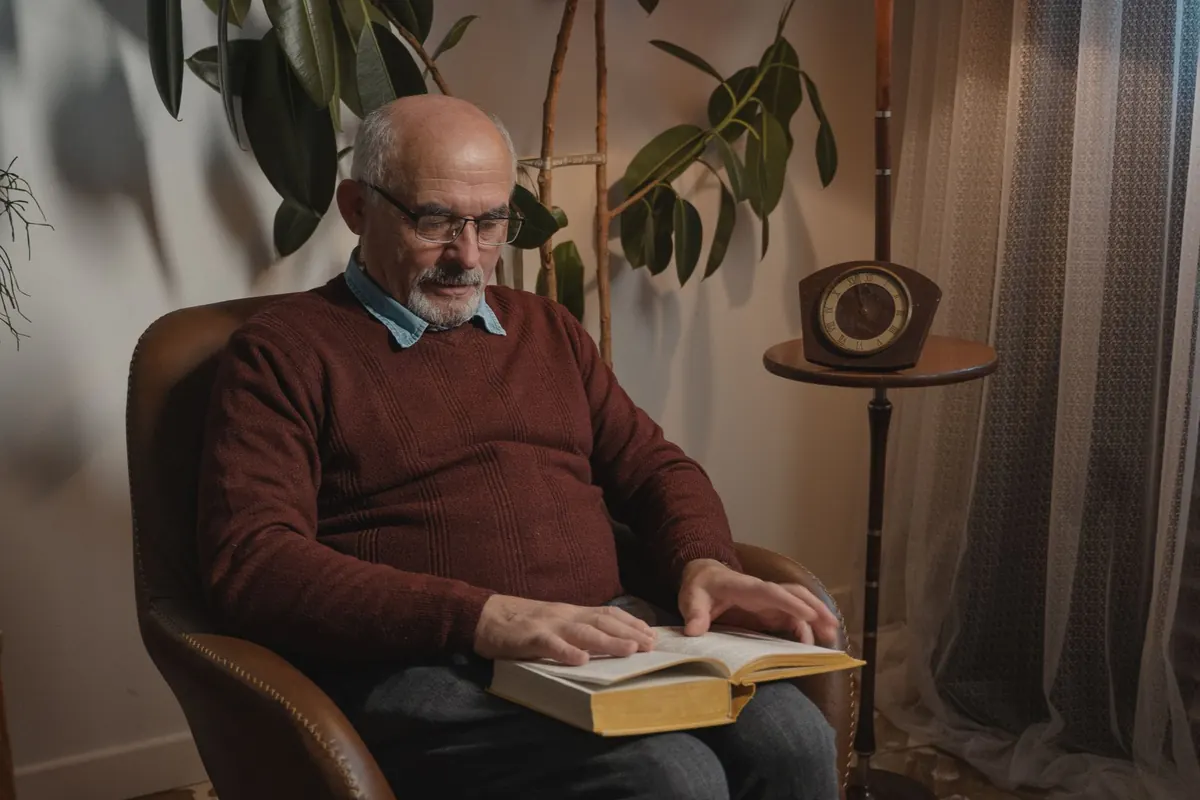
Photo: Tima Miroshnichenko / Pexels

You Might Also Like
A thoughtful review of Raynor Winn's coastal memoir, with notes on its strengths and slow patches, who will enjoy it, and what to read next.
A seasonal guide to matching the right book to the right spot — whether that's a windy beach, a sunny garden or a ten-minute train journey.