How to Choose Your Next Book: A Checklist for Avoiding Reading Slumps
A reading slump rarely starts with a sudden dislike of books. It starts with a mismatch. You pick up a dense family saga in the week a work deadline lands, or a bleak novel on an evening when what you wanted was comfort, and after three nights of re-reading the same paragraph you conclude that you have lost the reading habit. You have not. You have simply chosen a book that asked for more than you had available. The remedy is not willpower. It is a better question, asked before you begin.
Start with your mood, not the bestseller list
Bookshops are arranged by genre and tables are arranged by hype. Neither knows anything about your Tuesday evening. So begin with a feeling rather than a title. Do you want to be soothed, gripped, amused, unsettled or taught something new? Those five wants lead to very different shelves, and only one of them is likely to suit the week you are actually having.
Notice, too, the books you keep avoiding. If a novel has been recommended six times and you still cannot face opening it, that is information rather than a character flaw. Put it aside for a season; it may be the right book in March and the wrong one in November. And be wary of reading you have decided you should do. Obligation turns four pages into a chore, and nobody is awarding marks.
Match the book to your energy
Mood and energy are different things, and the second is easier to misjudge. You can be in the mood for a demanding book and still be too tired to read one. Ask yourself how much attention you have, not how much you would like to have.
Three honest energy levels
- Low. Tired, distracted, reading in short bursts. This is the territory of cosy crime, short story collections, slim memoirs, essays, graphic novels and rereading an old favourite. Short chapters and a strong narrative voice do a lot of the work for you.
- Medium. You can hold a plot and a handful of names in your head. Most contemporary fiction, narrative non-fiction and well-paced mysteries live here. You will read for half an hour at a stretch and remember where you left off.
- High. Sharp, curious, unhurried. This is when the long nineteenth-century novel, the dense history or the formally playful book earns its keep. This level is rarer than the other two, and pretending otherwise is how unread piles grow.
Be honest about your time
Length is not the same as difficulty. A five-hundred-page thriller with two-page chapters can move faster than a two-hundred-page novel that asks you to sit with every sentence. What matters is the size of the gap you are reading in, and what kind of attention fits inside it.
The two-evening test
Before you commit, picture the next two evenings. When will you read, and for how long? If the answer is “twenty minutes on the bus, both ways”, a book with dense paragraphing and a cast of thirty is a poor match, however good it is. If the answer is “a quiet Sunday afternoon with the phone off”, be more ambitious.
Reading in the cracks
Most reading happens in gaps rather than in long, sacred stretches: a commute, a lunch break, ten minutes before sleep, a bath, a wait at the dentist. Choose the format to fit the gap. A paperback that lives in your bag beats a hardback left on the hall table. An ebook on your phone rescues the supermarket queue. An audiobook turns a dog walk or a drive into reading time, provided you can follow a plot while doing something else.
The checklist
Run through these questions before you start, and again if a book has stalled twice. It takes about a minute.
- What do I want to feel in an hour? Soothed, gripped, amused, challenged or informed.
- How much attention do I really have this week? Low, medium or high, judged on a normal day rather than a good one.
- Where will I read it, and for how long at a stretch? Match the book’s density to the gap.
- Do I want to be pulled along or to work a little? Both are good; they are not the same mood.
- Do I want company or solitude? A familiar genre is company. A strange one asks more of you.
- What worked last time? Not the title — the quality: voice, pace, humour, a puzzle, a place.
- Do the first ten pages do anything for me? If you are indifferent, you are allowed to stop.
Test the book before you commit
Give every candidate ten proper pages. Not a skim of the blurb, not the opening line read standing up, but ten pages in a chair, at the time of day you normally read. Reading at the right hour tells you more than any review, because you are testing the fit rather than the book’s reputation.
If the first ten pages feel like homework, the next four hundred will feel like a sentence.
Two exceptions are worth allowing. Some books open slowly and reward patience — particularly older novels and substantial non-fiction — so if the writing itself is doing something you admire, give it thirty pages. And if a book has stalled for a fortnight with no pleasure at all, treat abandoning it as stock control rather than failure.
Three reliable routes out of a slump
Go shorter than feels respectable
A hundred and fifty pages, finished in two sittings, rebuilds the sense that reading is a pleasure rather than a project. Novellas, essays and short story collections are good medicine here.
Reread something you loved
Rereading removes the risk. You already know the world, so there is nothing new to hold in your head and nothing to be disappointed by. Plenty of readers find their way back to new books through an old one.
Change the format
If paper has stopped working, try audio. If audio has stopped working, try a slim paperback. The change alone often breaks the association between reading and effort.
Give yourself permission to stop
The most useful habit in all of this is a short one: put a book down when it is not working, and pick up another. Do it early, before resentment sets in, and do it without ceremony. Keep a small pile of candidates near your chair, chosen with mood, energy and time in mind rather than prestige.
Reading is not a test of endurance. It is a series of small, well-made choices about what to do with an hour. Make one of those choices now, and the slump usually takes care of itself.
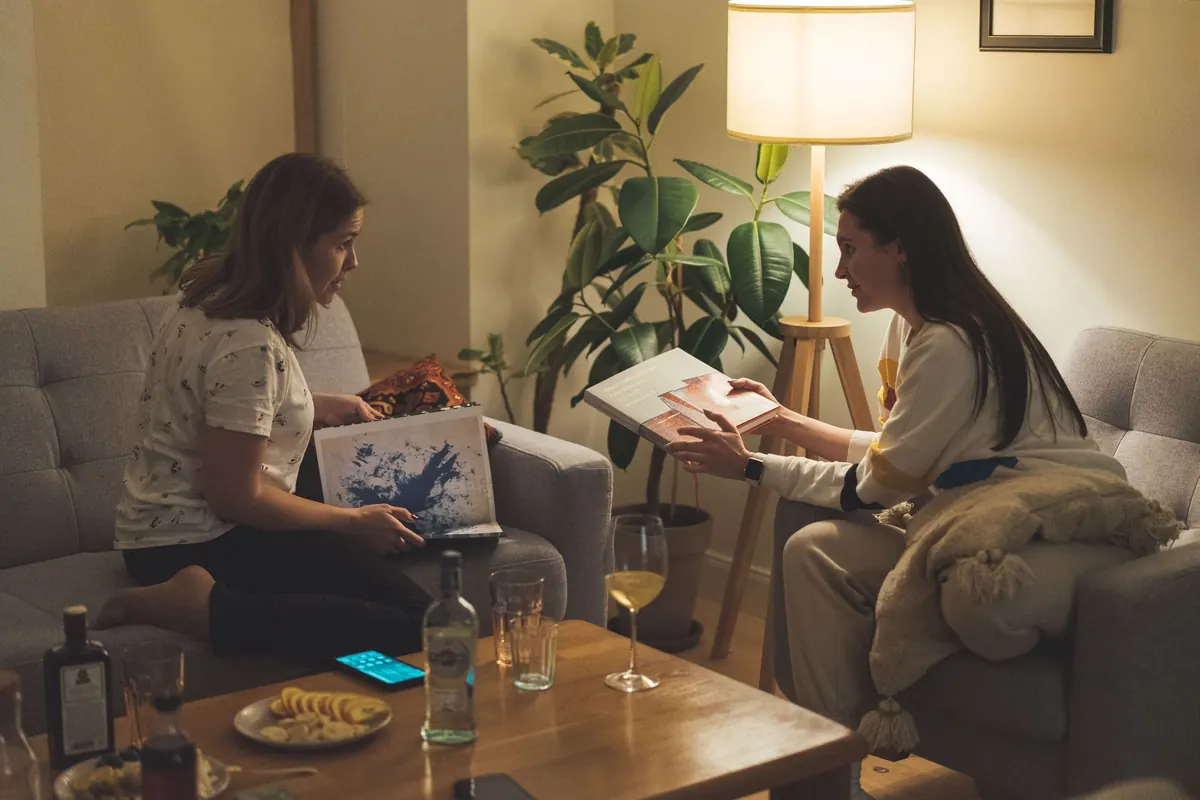
Photo: cottonbro studio / Pexels

You Might Also Like
A thoughtful review of Raynor Winn's coastal memoir, with notes on its strengths and slow patches, who will enjoy it, and what to read next.
A seasonal guide to matching the right book to the right spot — whether that's a windy beach, a sunny garden or a ten-minute train journey.